Monday, November 11, 2024

2024 Kringle Markets


ReSewn will have a table on Nov 30, Dec 1, Dec 14, and Dec 21 at the 2024 Waldschanke Ciders & Coffee Kringle Markets. 11am-4pm. Located in the indoor event space at 4100 Jason Street, Denver, CO 80211. See you there!

Tuesday, January 16, 2024

Pastel Patchwork Linen Hat

Wind-chill temperatures in Denver were in the negative double digits (F) the previous few days when I created this summer chapeau. The pastel scraps from upcycled linen garments were first pieced onto muslin scraps, then cut out in the hat pattern pieces. An 80's-era quilting cotton from stash is the lining.


Remove Bothersome Garment Labels

Do you have soft, cuddly garments in your closet that are degraded by uncomfortable, scratchy labels?  Life is too short to tolerate that, so remove the labels. Their stitching may often be unpicked with a seam ripper or snipped with tiny shears. Occasionally an overlocked or flatlocked seam needs to be opened to fully remove the label and in that case it is often best to cut the label off. Need help with this? Contact ReSewn if you have a several garments that need labels removed. If you are concerned about forgetting fiber content for laundering and storage, take a photo of the garment with the label and save it in a digital folder.  


Tuesday, January 9, 2024

Pocket Repair

These First Lite pants are worn constantly by their owner and are generally well-made, but the pocket lining fabric is not as durable as the rest of the fabrics. This was a quick repair using a fabric scrap from stash. 


Tuesday, October 17, 2023

Concert Belt Bag From Repurposed Suede Vest

Sewed this prototype bag from a repurposed old suede vest. The main pocket dimensions are 6 inches by 4 inches by 1.5 inches to fit the strict bag requirements of Denver's Ball Arena. The front and back pieces have the original tiny pockets from the vest, with simple straps with hook and loop to hold items in. The inside is not lined, but the seams are bound. This bag was perfect for the Peter Gabriel concert last night. Phone, wallet, and keys fit comfortably inside and earplugs were easily accessible in the outer front pocket. The show was excellent, but extremely loud. 


Friday, September 15, 2023

Quilt Coat With Hand-Felled Seam Allowances


A newly completed quilt coat for myself. Several weeks ago, I happened upon a lovely estate sale and found two machine-quilted bedspreads and two matching pillow shams for an unbeatable price. I have been thinking about this type of project for a while, but was waiting for just the right machine-made quilt. Still pondering front closures. Might make another with slight modifications since this coat used less than one of the bedspreads.


Machine-sewed the shoulder, side, and sleeve seams at 3/4 inch, unpicked the quilting stitches within the seam allowances, trimmed the batting and beige inside fabric, then fell-stitched the seam allowances by hand. This hand-stitching time commitment was enormous, but I appreciate the touch it added to the original mass-produced item instead of just using my serger on those seams.

.
Added a hanging loop before sewing down the inside collar.


Wednesday, August 30, 2023

Updated an Old Backpack

Extended the use-life of this old Jansport pack by adding large mesh pockets to each side and covering the inside bottom frayed seam with grossgrain ribbon.


Wednesday, March 29, 2023

Merino Hoodies Sewn From Thrifted Sweaters

Several weeks ago, a local chain of thrift shops had a 99 cent sweater sale. I found many merino sweaters, though only a few cashmere sweaters to repurpose as mitten linings. What to do with the merinos after they were machine-washed and dried? For starters, these two hiking/workout hoodies. Some had holes, some shrunk more than others during laundering, so I cut apart and pieced them together to fit my patterns. Both were an experiment of combining sweatshirt patterns with a close-fitting balaclava pattern instead of a traditionally looser sweatshirt hood, and the results turned out well. The hoods are cozy neck gaiters when not in use, fit easily over baseball-style brimmed hats, and do not need a cumbersome drawcord. The face edges of both of these hoods were finished with ribbing harvested from the sweaters. 

Outer front with large kangaroo pocket. This grey/black combo has longer cuffs with thumb openings.

Back:

Outer front with exposed serged seams:
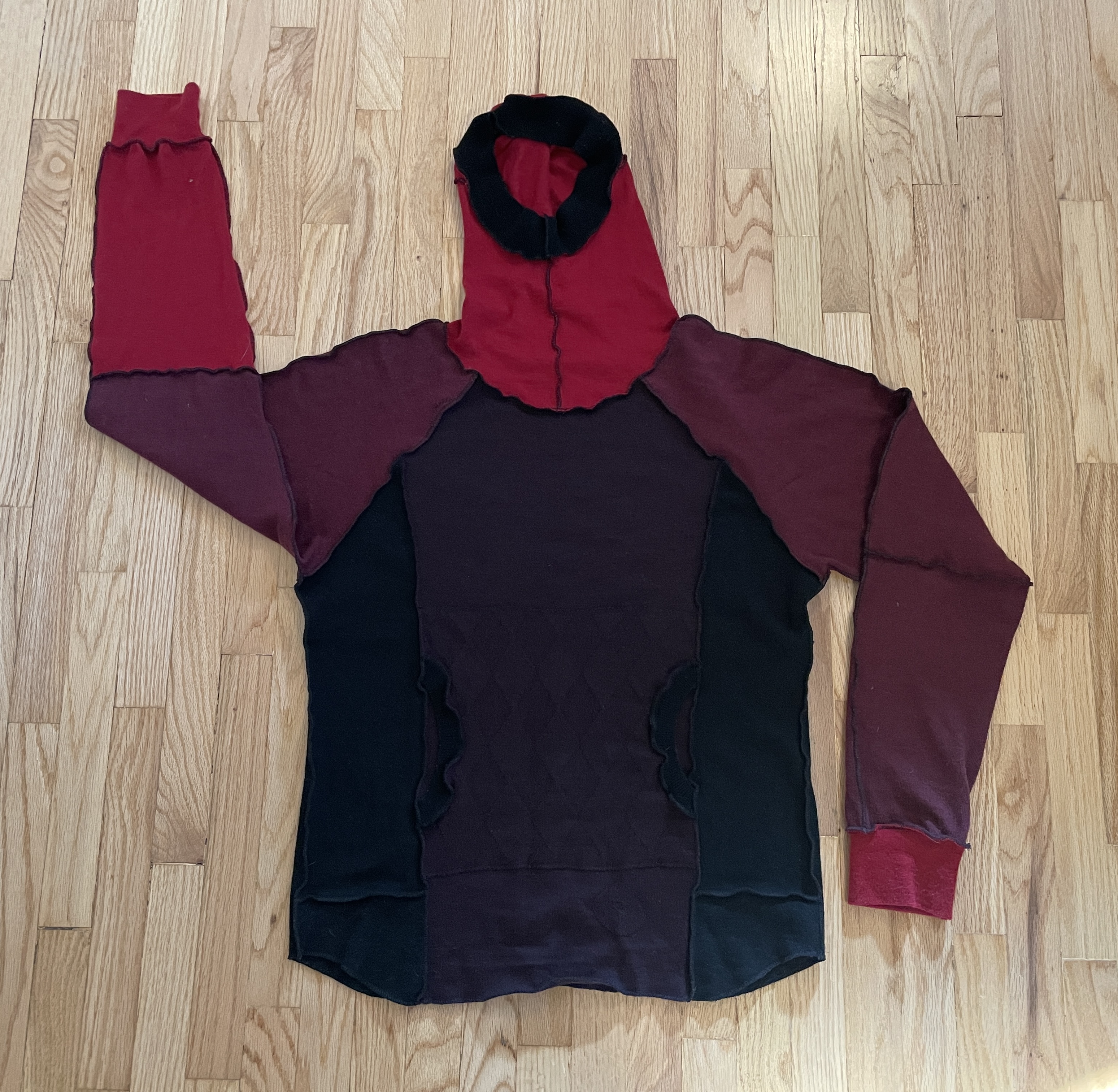

Front pocket open edges finished with ribbing harvested from the sweaters:


Monday, March 6, 2023

Winter Hardshell Pants Receive Side Gussets

This pair of non-stretch winter hardshell pants were purchased in approximately 1995 or 1996. They haven't been worn much for several years and were now a bit too snug for hiking/snowshoeing uphill, but the outer and inner fabrics, waistband hook & loop, bottom snaps, and YKK 2-way fully separating side zippers are all in good shape. How to revive them for a current outer layer? I added gussets to the upper sides, moved portions of the zipper tape accordingly, and altered the velcro top closures by adding 1" webbing, D-rings, and additional loop tape at the front waistband. While seams were open, I replaced the back waistband elastic. Now they will easily accommodate any base and mid layers for extreme winter weather. 

Do you have clothing or gear that needs an adjustment? Contact me for a free cost estimate. 

After:


Gussets:

Before:

Sunday, February 26, 2023

Gifted Vintage Fabrics

 Looking forward to sewing these vintage fabrics given to me by a quilter friend, who was given them by another friend. Planning some bags, as most of the fabrics are upholstery weight. 


Friday, February 17, 2023

Resized Jeans and Extended Front Pockets

While recently resizing these jeans, I extended the length of the front pockets since the side seam was open. Who or what is behind the ridiculously tiny size of women's jeans front pockets? Now a credit card and ID may securely be tucked in the pockets without worry of them popping out when sitting down. 


Sunday, February 12, 2023

Adjusted Webbing On Chacos Sandals

 My well-worn Teva sports sandals needed to be replaced this year, I was ready to try other brands, and I was lucky to find one pair of Chacos that fit at a large discount shoe store this winter. I had not previously worn Chacos sandals and was perplexed by how the webbing "tails" hang down to the ground at the back after adjusting the straps on my feet, but while still in the store I figured it could be fixed. A quick google search found that the company intentionally does that to allow for variation in foot volume and to make sure people can safely get the shoes on and off, though they will shorten the strap on request. After assessing, I decided to adjust them myself. Instead of cutting off length on the webbing tails, I carefully unpicked the stitching on the webbing that holds the tabler hardware, adjusted the tabler webbing to have one additional inch of an overlap, and resewed that webbing. I think this will be more comfortable to have the tablers more on the side of my feet instead of under the ankle bones, though will have to see with wearing them when the weather warms up. I used grey thread in case I need to unpick and resew at some point; tight stitches in black thread on black webbing is most difficult to unpick without accidentally picking out some of the webbing threads. Typically, I have footwear adjustments/repairs done at a licensed shoe store or through the manufacturer, including having my old made-in-Italy leather Vasque hiking boots resoled, and new soles and footbeds on leather Birkenstock sandals, but I have sewn and resewn so many webbing straps for bags/belts/etc over the years that I decided to try this adjustment myself. The most difficult part was fitting the webbing under my sewing machine presser foot, since I have regular sewing machines that are not made for footwear. 

With my assistant:

Wednesday, August 24, 2022

Summer Hiking Gaiters

These summer hiking gaiters were quick to make. Cut off the lower portion of an old long-sleeve knit top. Hemmed the cut edges to become the new lower edges of the gaiters. Added gaiter hooks with elastic. Sewed small tucks at the upper center back (the old sleeve hem) for a just-right snug fit above footwear. Keeps trail debris out of hiking boots or trail runners.  


Sunday, July 31, 2022

Linen Summer Tops Sewn From Repurposed Textiles

Three new linen summer sleeveless tops and one 1/2 zip pullover with collar. Sewn from a thrifted linen tablecloth, a too-small dress, two short sleeve button-up shirts, and one repurposed lightweight zipper. The arm and neck edges were finished with bias tape made from the same textiles. Embracing the wrinkles because... linen.

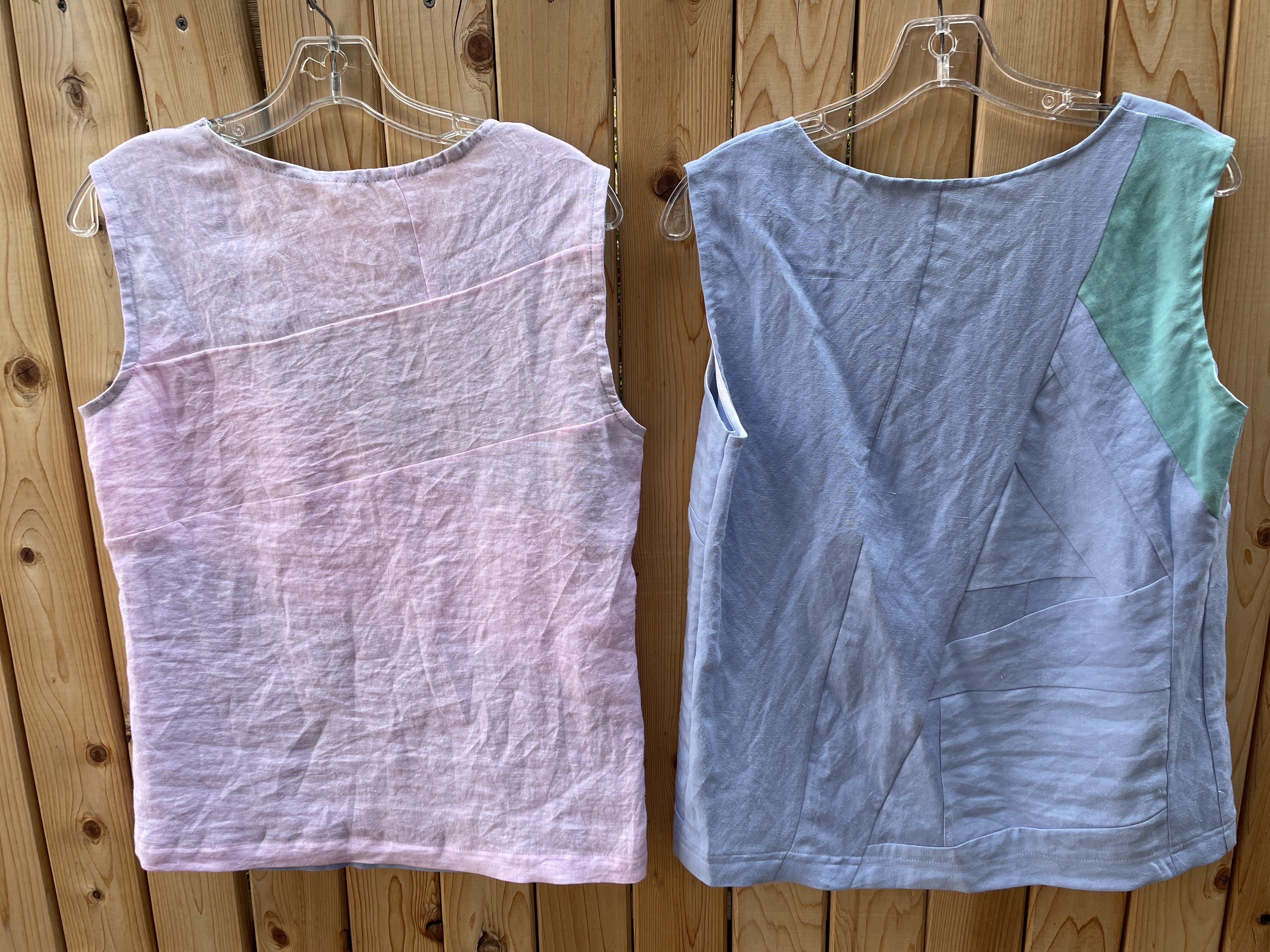
Back side of two tops serger-pieced to have enough fabric:

The three old garments:


Tuesday, June 21, 2022

Zero Waste Clothing and Accessory Inspiration

Fabric scrap waste is a large problem of mass-produced clothing. Zero Waste Daniel creates new fabric from the scraps and is an inspiration for those who strive to create less waste from sewing.

https://www.youtube.com/watch?v=2qqiKNzwHMg

https://zerowastedaniel.com

Tuesday, April 26, 2022

Temporary Twist Tie For Broken Zipper Pull Tab


Do you need a temporary fix for a broken zipper pull tab on a garment? The metal tab on this proprietary zipper caught in the holes in a clothes dryer drum and broke off. The locking tab will not move up or down without a piece within the pull being engaged, and this small, sturdy zip tie is a functional, temporary fix.

Tuesday, April 5, 2022

Wool Boot Inserts From A Felted Wool Sweater

Sometimes I find a dense wool sweater that felts up so much during the washing and drying process that it is too thick to sew on my non-industrial machines for my sweater mittens and hats. I had a couple of these sweaters in stash and finally discovered a use for them: wool inserts for winter boots. This lovely Dale of Norway sweater was gifted several years ago from a friend and it made toasty inserts for two pairs of my winter boots. 

For one pair, the new inserts replaced the removable insole in my insulated hiking/snowshoeing boots, so as to still have enough space for my wool hiking socks. I wore them for a snowy, cold-weather event that required a lot of standing around and they kept my feet warmer. 

For the second pair, the wool inserts went over the insole to be able to wear a dressier pair of winter boots with tights and no socks. Worked perfectly. 


Down Jacket Zipper Replacement

Do you have a garment with a zipper that is not performing well? Contact me to inspect it and to provide a repair or replacement estimate. 

This hip-length down jacket was a good candidate for a new front zipper, as the old, one-way separating coil zipper would frequently split open from the bottom and in general was not working well. YKK-brand zippers sometimes just need a new zipper pull, but as with this jacket, many coat manufacturers use their own proprietary or cheap generic zippers, which do not have replacement pulls available. 


The easiest and most economical way to remove an old front zipper in a down jacket is to carefully cut out the portion of the tape that is exposed. Opening up seams that might release down is always avoided.

The new zipper is a YKK-brand 2-way separating molded-tooth zipper. With jackets longer than waist-length, 2-way separating zippers are usually a better option than 1-way separating.

Pinned the new zipper in flat under the front edges.


New 2-way separating zipper sewn in.


Tuesday, February 15, 2022

Repurposing and Rescuing Textiles

 Are you interested in the process at ReSewn for repurposing and rescuing textiles? Here are a few details.

Textile sources include local thrift stores, yard sales, friends and family, and local shops such as ReCreative Denver, The Craft Box, The Hidden Treasure 2, and ArtParts. Sometimes these sources also have usable zippers and various hardware, though #5 zipper tape and zipper pulls for some of my bags are typically purchased from shops that only sell new supplies. Thread is always purchased new, because old cotton thread can rot, and polyester thread may weaken over time, especially when exposed to sun.
All textiles are machine-washed and dried immediately after procurement. This is to felt woolens, remove dust/dirt, ensure no insects or microscopic eggs, and to expose any weak spots or holes in the fibers. The differences in how much various wool and cashmere felt or shrink in the washing and drying process is fascinating. If you have your own textile that you would like me to transform into something else, it will need to be machine-washed and dried, and possibly ironed prior to me assessing it.
Preferred sweater fibers for sewing mittens and hats are cashmere, merino, lambswool, alpaca, and other woolens. Densely woven wool blazers and coats make a weather-resistant outer mitten layer, though the final mittens do not have stretch across the hand and thumb, and big, boxy original garments with few seams are best for reusing. All of my sweater mittens are fully lined; cashmere, merino, and lightweight woolens
make ideal linings. Thick woolens are used for the outer mitten layer and many are naturally water repellant for use in wet snow and sleet. Cotton sweaters are usually not worth repurposing into mittens because they typically look tired, faded, and pilled by the time they are donated by their first owners, and cotton is a terrible fiber to try to stay warm in cold weather. Acrylic sweaters are ok for people who are allergic to woolens, and are available in a wide variety of colors, but are never as cozy as cashmere and the edges fray when cut. Another reason to prefer woolens over petroleum-based synthetic knits (looking at you polyester fleece!!!) is micro-plastic pollution on the entire planet. Look into it. It is everywhere, including our water and food sources. But again, for those allergic to woolens, polyester fleece might be the best option. I rarely find anything used made of polyester fleece that I'm able to repurpose, because the best stuff will still pill, the laminated wind-block will delaminate, and the garments still in good condition from used outdoor gear shops are priced too high to repurpose.
The bags I sew are often made from denim, canvas, leather, suede, and some synthetics. I try to find a use for all parts of the original garment/item before sending tiny fabric scraps for recycling for industrial uses. All leather and suede scraps are saved, and I recently discovered how to make myself earrings from the tiniest suede and leather scraps. Some woven synthetic fabrics are durable and make long-lasting linings in my bags, as well as good lightweight, packable bags. Very occasionally I find a raincoat in perfect condition to repurpose. We all have to decide our own comfort level with function and long-lasting vs. natural and possibly needing more frequent replacement. Either way, repurposing existing, locally-sourced textiles can have a lighter impact than buying brand new that was shipped from the other side of the planet.
Rayon is one fiber that I do not repurpose used or buy new. It is plant-based, but heavily, heavily processed. It pills easily, shrinks unpredictably and variably, and often contains dyes that are improperly set.
Silk is a durable, delightful, natural fiber, and it seemingly takes all dye colors well. A silk eye mask for sleeping is a luxurious way to block light. Silk is naturally gentle on human hair, making it ideal for hair scrunchies. Wait, are scrunchies still or ever back in style? That is debatable but anyone who has hair long enough that they want to pull out of the way sometimes can benefit from scrunchies. Locally-sourced and locally-sewn? Even better for those in northern Colorado.
Hope this helps with offering insight about ReSewn. The primary goal is to repurpose existing while creating new functional favorites.
-Anna

Thursday, November 25, 2021

Bicycle Handlebar Bags by ReSewn

Excited to share the latest design from ReSewn: bicycle handlebar bags. These bags are offered in two sizes, are sewn from repurposed and reclaimed textiles, are fully lined, and the D-rings at both ends of the zipper easily convert the bag to a cross-body or shoulder bag. The larger bag size, show in photos below, has four loop options to attach to your handlebars with double-sided hook and loop or other straps, as well as an option to attach to the stem. The zipper tape and pull are new #5 coil non-locking. Contact me if you have a favorite textile that you would like custom-sewn into one of these bags, and if you prefer a different zipper style or size. 


2024 Kringle Markets

  ReSewn will have a table on Nov 30, Dec 1, Dec 14, and Dec 21 at the 2024 Waldschanke Ciders & Coffee Kringle Markets. 11am-4pm. Locat...